
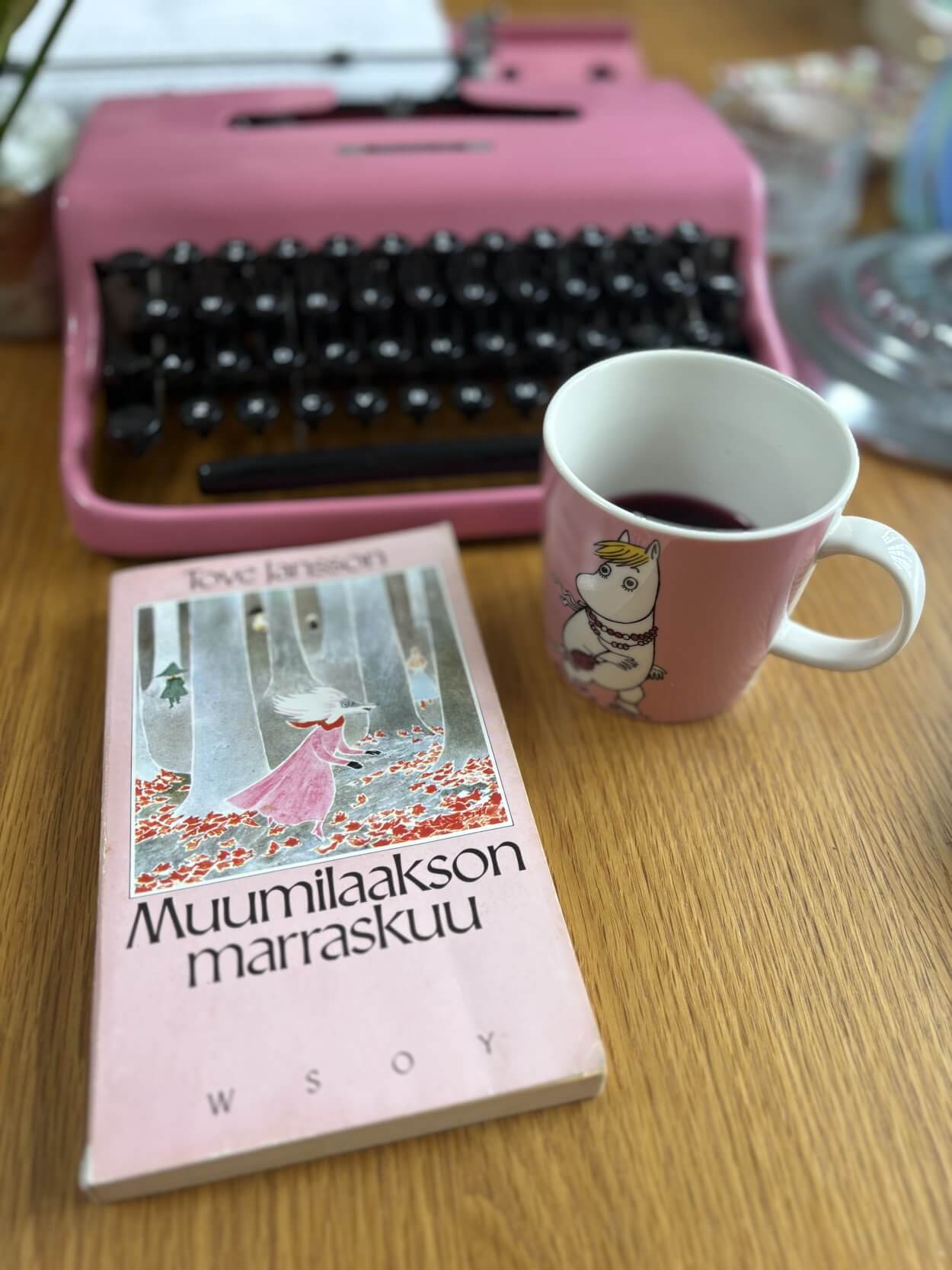
A very apt final book from November, I loved reading in Finnish again. I started the year reading Tove’s childhood autobiography in Finland, so it felt apt to be ending my 2025 reading goal (near enough) with another Tove!
What’s a Moomin book without the the actual Moomin family like? What happens in the valley when its famous family is far away? What does an empty Moomin house look and feel like?
An eccentric cast of characters gravitate to the empty Moomin house, each bringing their own set of anxieties, fears, and preoccupations to the empty house. Watching them inexpertly create community and try to work together is heartwarming. It’s an uneven thing, but they manage to have at least one party, however imperfect it is.
Like all of Tove’s work, there are some expertly drawn characters that perfectly encapsulate human foibles. Trying too hard. Never having the confidence or the time to do new things. Being afraid of contamination. Thinking others are judging you. Being both deferential and frustrated by old age. Judging others for their domestic attitudes.
I loved all the exquisite details of the house and its domesticity. I could feel and smell the shut-up rooms, taste the fish and potatoes, and hear the slapping of water in buckets on cleaning day.
This is Tove’s last ever Moomin book from 1970, and it’s conjectured that its elegiac tone and focus on being an orphan/the absent Moominmamma is a reflection of a Tove who lost her mother around this time. She said that she wasn’t able to return to the happy Moomin valley again after this one.
The perfect November read.
One word: musing.
Leave a Comment