
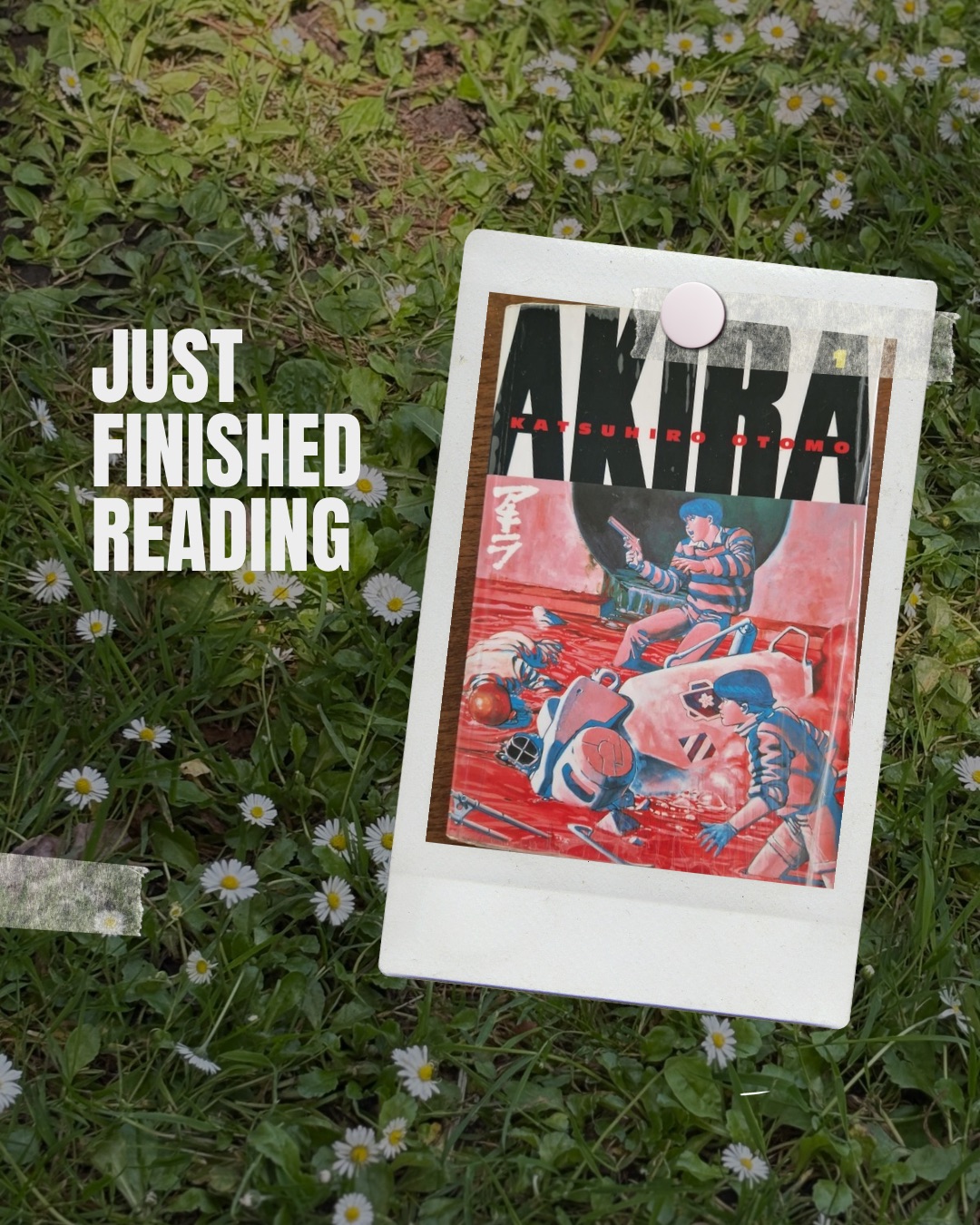
This was one of the first works of manga I read for book club and it’s a seminal genre text. It helped launch, or at least consolidate, the cyberpunk genre in manga. Originally published in the 1980s, it was one of the first manga series to be fully translated into English and published by Marvel, making it an important work both within the genre and in the history of manga’s international reach.
Set in a dystopian Neo-Tokyo, the story explores themes of urban decay through the lens of biker gangs, police forces, reform schools, political unrest, and government experimentation. The artwork is absolutely beautiful, and the story moves at a fast pace with plenty of action.
The volume I read serves as the beginning of a much longer narrative. It follows two childhood friends, Kaneda and Tetsuo, who become entangled in what appears to be a secret government-backed program involving telekinetic powers and human experimentation. As the story unfolds, Tetsuo is affected by these forces himself, setting in motion the central conflict of the series.
It’s an adventure story involving rival gangs, conspiracies, underground movements, and powerful forces operating behind the scenes.
Reading it now, you can see the foundations of ideas and aesthetics that have influenced countless films, comics, and works of popular culture since.
As a product of its time, some aspects of the story might be framed differently if it were written today. Even so, I found it fascinating to return to an influential text and see where many of the conventions of cyberpunk originated. For someone like me, who isn’t deeply immersed in manga, there were lots of familiar cultural touchstones that I recognised from popular culture.
I loved the exquisite details of the artwork and the grunge of the futuristic city.

Leave a Comment