
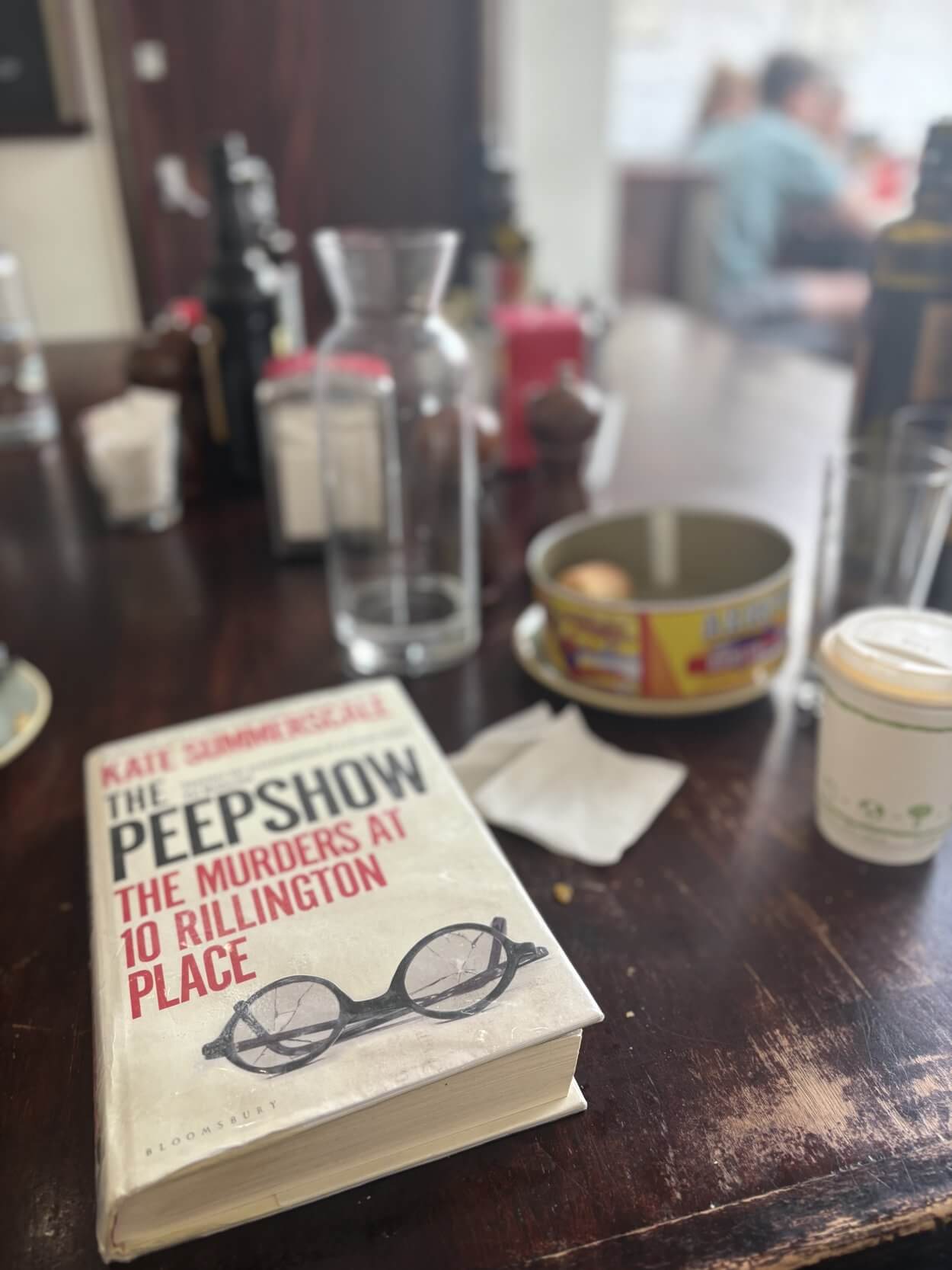
This was a true crime non-fiction read I found really compelling: it goes hard and tackles a horrific 1950s crime in the social context of a divided and down- on-its-luck London.
I’ve read Kate Summerscale before and I appreciate her detailed approach to victimology and the psychology of the perpetrator, all within a broader social context.
The strength of this book lies in how vividly it captures the 1950s London of cheap boarding houses and intermittent sex work. It also paints a vivid picture of a callous murderer.
Summerscale explores how racism, misogyny, poverty, and boarding house life combust in a series of violent and horrific crimes.
I wasn’t familiar with the 10 Rillington Place murders beforehand, but they were infamous at the time and became a national sensation.
What also stood out to me was how the book delves into the miscarriages of justice surrounding the case and how that shaped public perception of the crimes.
Summerscale also gives careful attention to the victims: examining how and why they were targeted in the first place. It’s a powerful exploration of what it meant to try and survive in a society with little support, widespread poverty, and limited safety nets. It’s also an indictment of the culture of silence, propriety, and class boundaries.
This is more than just a recounting of a crime; it’s a deeply unsettling but insightful psychological profile of a disturbed perpetrator and his descent into notoriety, someone who attempted to mythologise himself, which is both disturbing and frustrating.
Ultimately, it’s an engaging, meticulously researched piece of social history and investigative writing. Summerscale brings an emphasis on truth, justice, and the long shadow cast by institutional failure.
One word: gruesome.

Leave a Comment