
This was a really fascinating non-fiction read. I started this in November and finished in early December, and it completely held my interest.
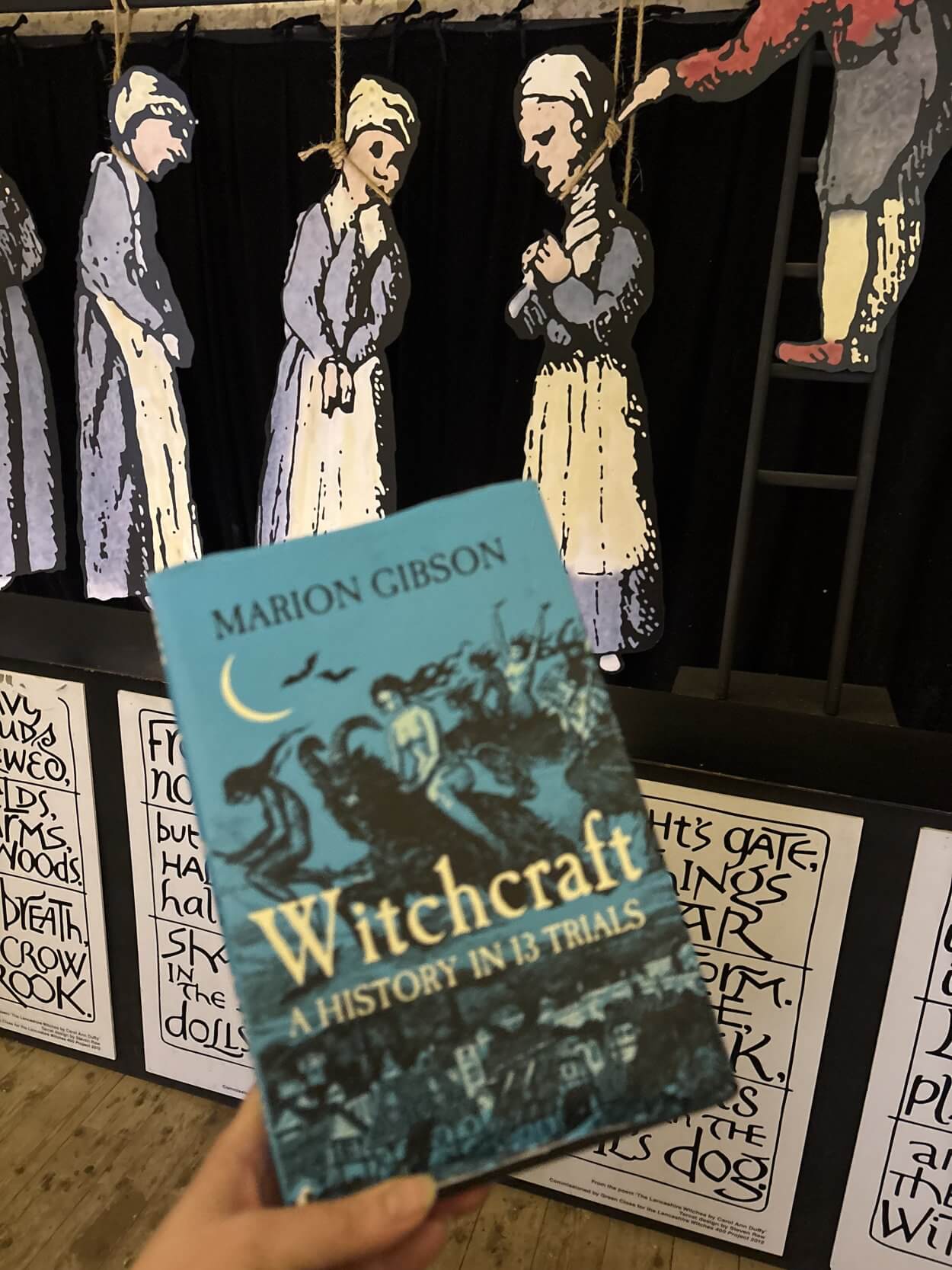
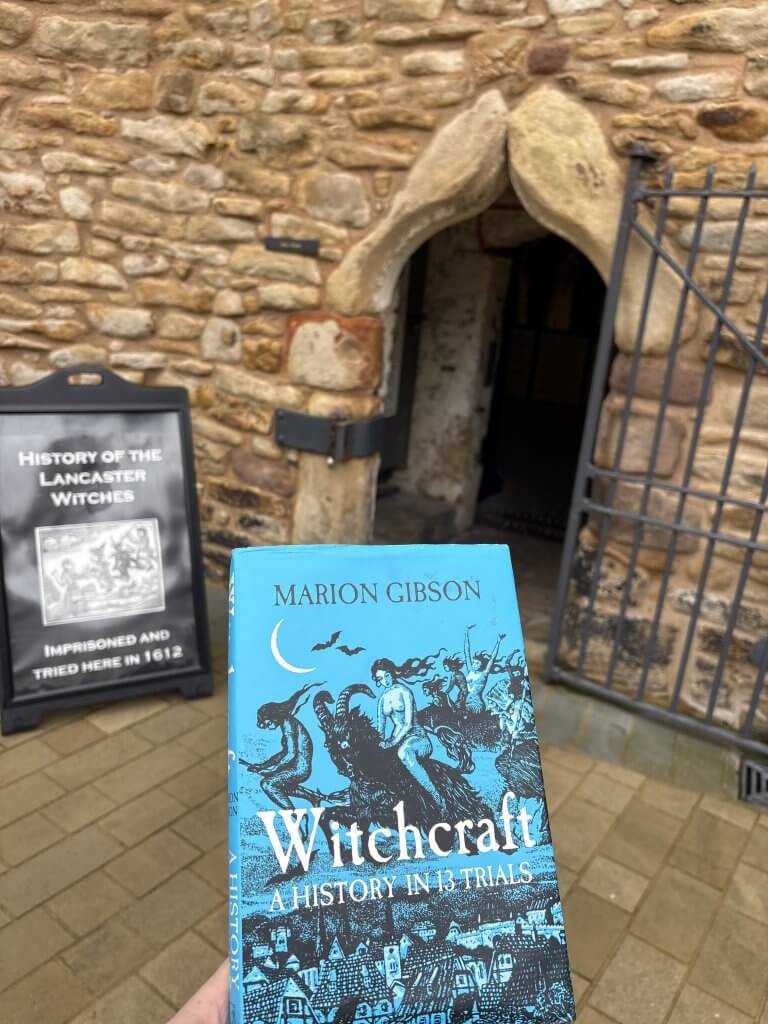
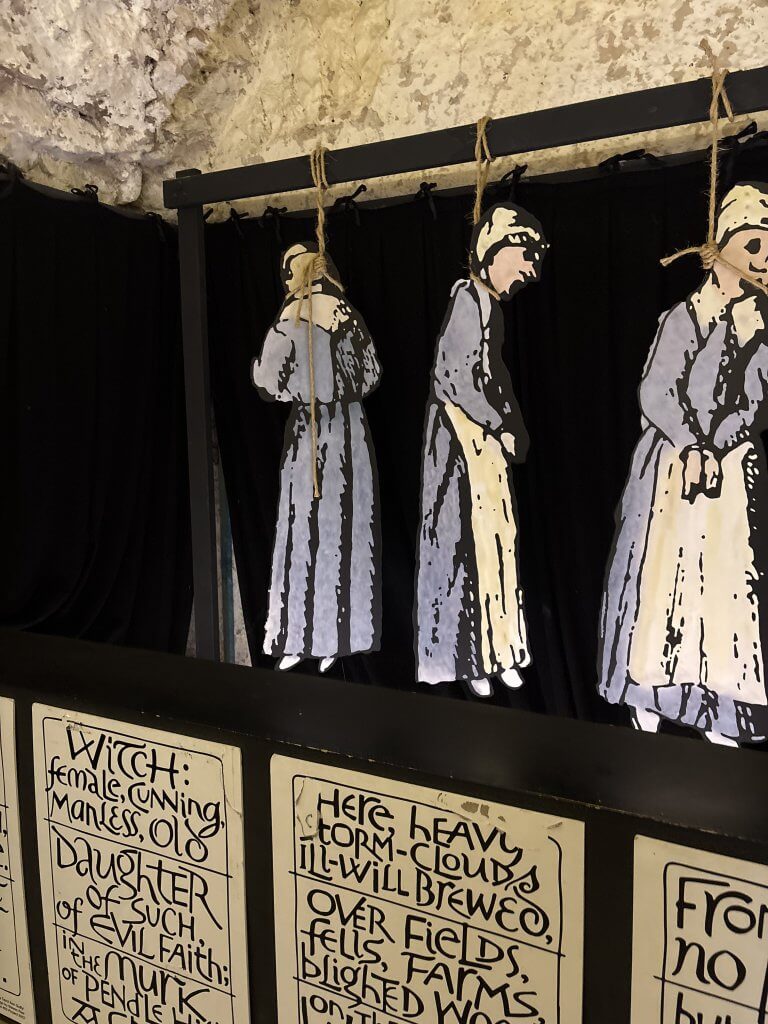
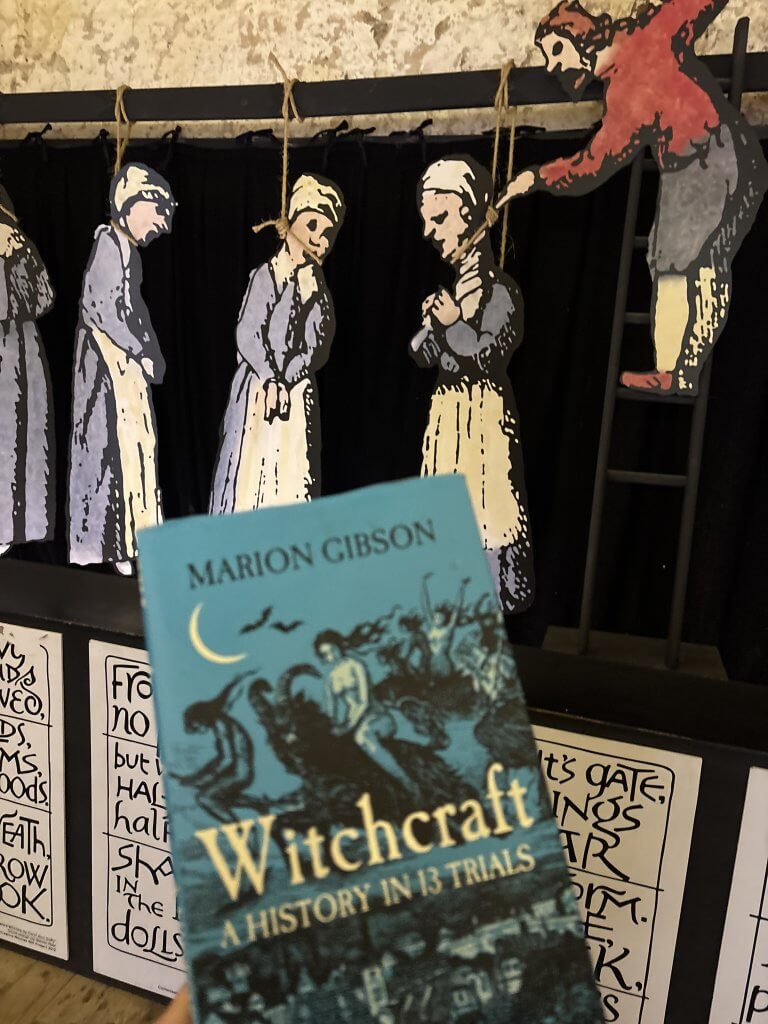
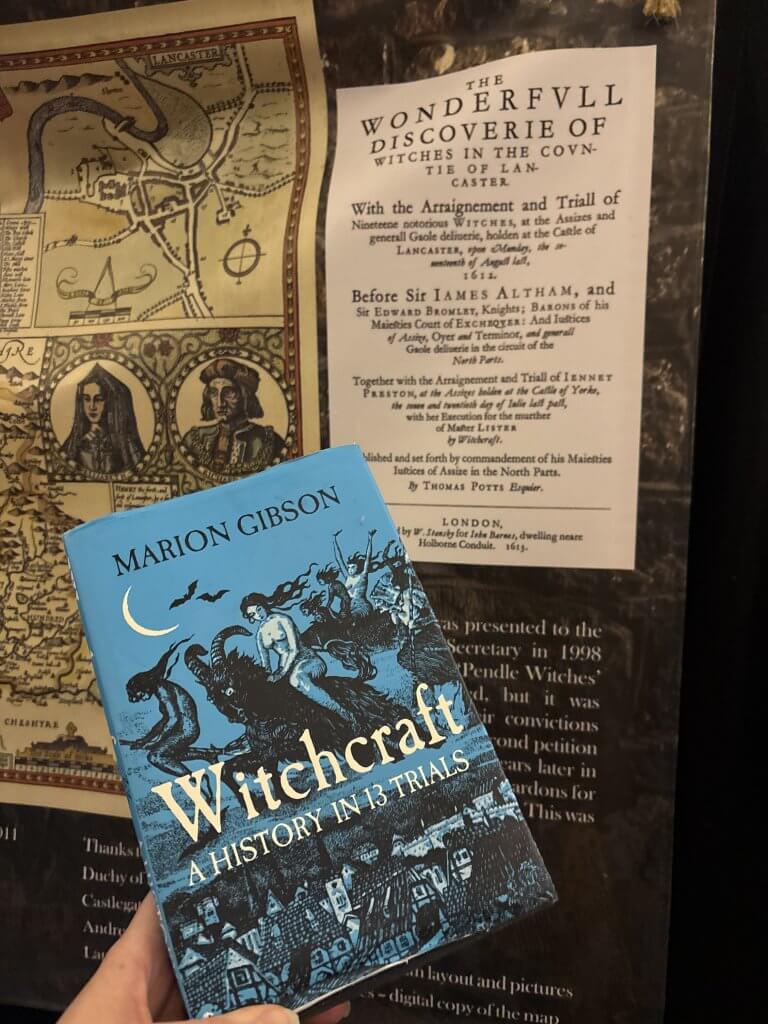
Pictured: the book in Lancaster Castle, in the Tower where the Pendle witches & others were held. (Sadly, not a trial that’s covered in this book).
I really liked the way Gibson examined different witchcraft trials from a wide range of cultural contexts, yet still managed to weave them together into a coherent narrative about how the category of “witch” has changed over time. She also explores how the rise of demonology reshaped ideas about witchcraft: before, magic was often seen as something people simply did, but with the influence of Puritanism, religious reform, and shifting cultural attitudes, magic increasingly became associated with the devil. All magic was suddenly “bad,” and that shift dramatically changed the way accused witches were viewed.
The book includes some well-known cases as well as lesser-known ones, and I appreciated both. I also found the contemporary context, especially the discussion of “witch children”, important and sensitively handled. The book is clearly written with an intersectional awareness, which I appreciated. Near the end, Gibson even looks at Stormy Daniels, whom I hadn’t realised had been labelled a “witch,” and how accusations of witchcraft get used metaphorically as a stick to beat certain categories of women.
My favourite chapter was probably the one set in northern Norway, in Finnmark: the atmosphere and historical detail were fantastic. Overall, there’s something here for everyone. It’s not only a thorough piece of scholarship but also a genuinely engaging read.
Leave a Comment