
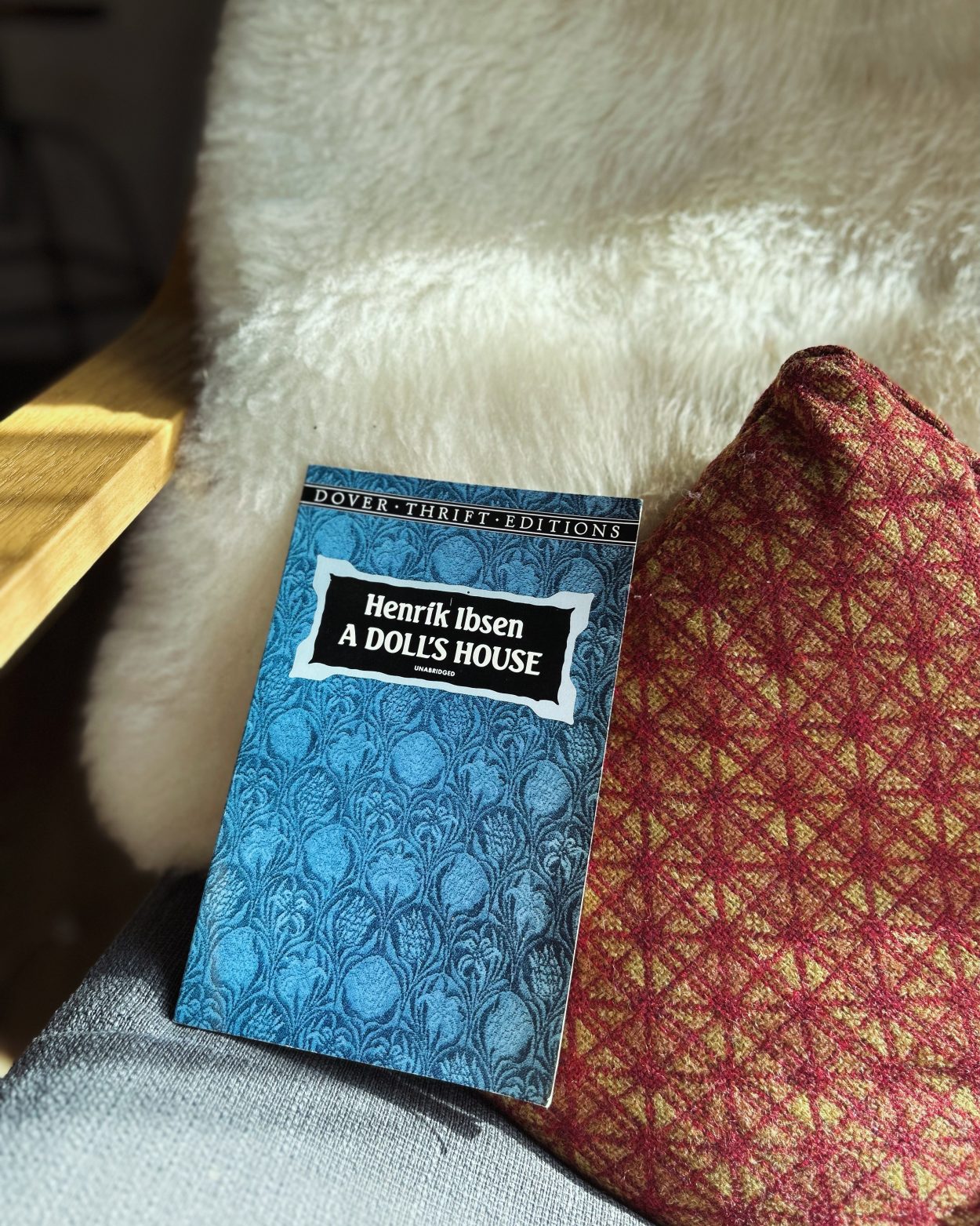
First of all, I need to see this in performance! I can really see how the text would come alive with dialogue and physical drama.
This play is a very relatable and straightforward domestic drama set in the busy pre-Christmas period in a Norwegian town around the late 19th century. But underneath the middle-class cosiness of Nora’s and Torvald’s interactions lies criminality, forgery, feminism and a woman’s desire for self-determination, illness, poverty, social class… Add in some sizeable cracks in the facade of their happy marriage, and you have an intelligent and engaging tale that has more to it than meets the eye!
Nora definitely steals the show as someone who is caught between forces outside of herself and her own desires. Frustrated and limited, Nora goes through stages of realisation, alienation, and crisis. The final denouement between husband and wife at the end is a masterpiece.
A short read, this play is definitely a great example of the social domestic drama of the 19th century.
Interesting trivia: Ibsen based this on a friend’s life. In real life, the friend was sent to an asylum by her husband (but it’s ok, he requested her back home after two years)…. The friend apparently never forgave Ibsen for fictionalising her life during a very painful period.
I have also come across Henrik Ibsen in my research into Shakespeare and the Nordics. He really shaped ideas of drama in Norway and beyond, and has been a national and international figure for a long time.
There were other contemporary Nordic writers who, like Ibsen, wrote plays and novels exploring social issues of the day: the women’s movement, national identity, workers rights, agricultural policy, healthcare etc.

Leave a Comment