
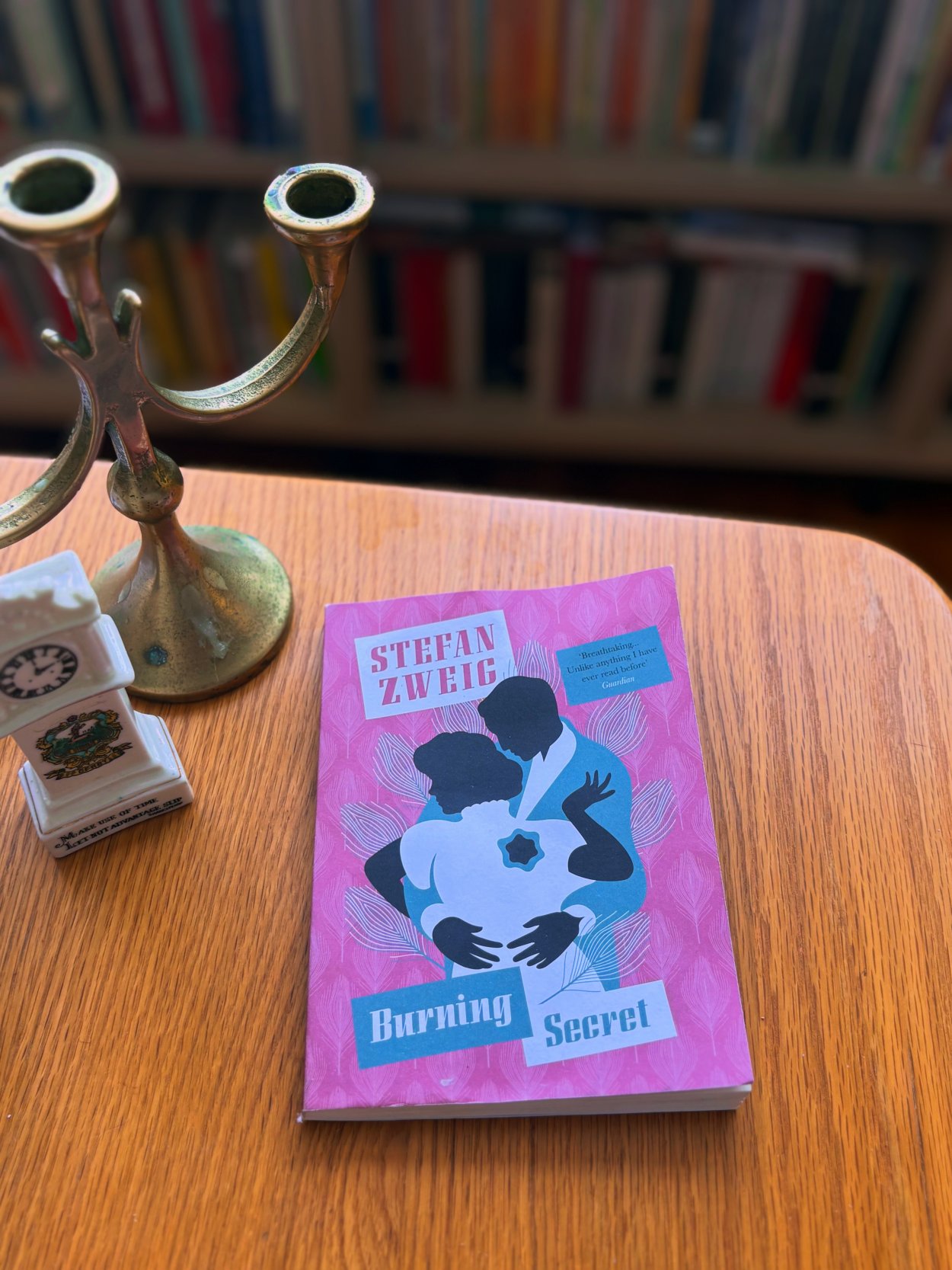
Stefan Zweig’s reputation often precedes his work, especially when you consider his extraordinary life. Exiled from Austria in the 1930s, going from London, Bath, New York, and Conneticut, to Brazil, he and his wife died by their own hands as in 1942 as a desperate response to the world.
His incisive novellas have often been reprinted; in recent years, Zweig has had a bit of a cult following, though he was always a literary powerhouse: one of the most read and translated writers of his age. He captures so much of what makes the 20th century so intriguing and mythical, yet infuriating and depressing. (He also wrote biographies of Mary Queen of Scots and Marie Antoinette).
This novella explores adult sexuality through the perspective of a child. The story follows a suave Baron staying at a hotel: a man who treats seduction as a form of conquest. His attention settles on a married woman holidaying with her twelve-year-old son, and he decides to get to the mother through the child.
What begins as a ‘simple’ manipulation of friendship and vanity turns complicated. The boy, starved for attention, becomes intensely attached to the Baron. He mistakes the Baron’s calculated charm for genuine affection, and when that attention wanes, he experiences it as abandonment and betrayal. His emotional spiral is beautifully captured.
Much of the story’s power comes from the child’s confusion. He senses danger and clocks his mother’s vulnerability, even if he cannot fully understand the sexual dynamics unfolding. Zweig captures that half-understood emotional world brilliantly: the humiliations, jealousies, fantasies, and fears of a child confronting adult desire for the first time.
The novella gradually builds a sense of inevitable catastrophe, and the tension comes more from the emotional misunderstanding than the seduction plot itself.
Read if you want to observe a growing adult consciousness, and like a novella with sharp plotting and psychology.

Leave a Comment